


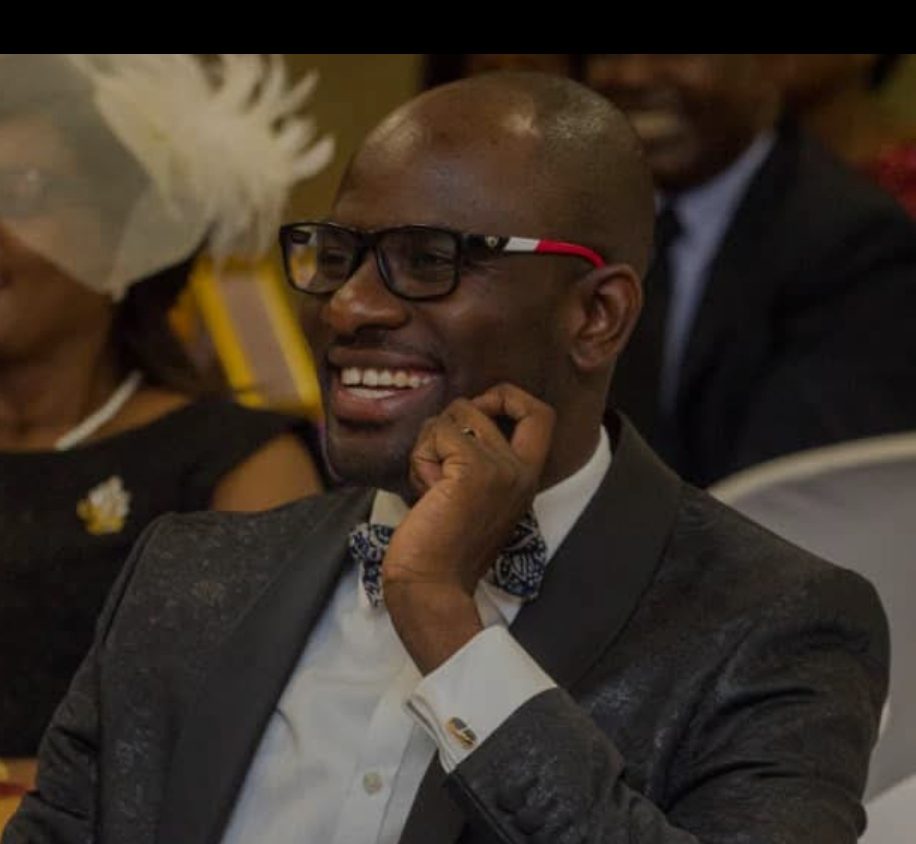
“One does not choose principle because it is easy or popular. This moment should not be counted as defeat, but as a time of clarity.”
— Binwell Chansa Mpundu, Statement on Bill 7, December 2025
AT A GLANCE
| Full Name | Hon. Binwell Chansa Mpundu |
| Born | 9 October 1982, Zambia |
| Constituency | Nkana, Kitwe · Copperbelt Province |
| Party | Independent (2021–present); formerly Patriotic Front |
| Education | Grade 12 Certificate · Certificate in Accounting · Diploma in Law |
| Profession | Accountant & Politician |
| Movement | Ichabaiche — Movement for Good Governance (Founder & Leader) |
In the hard-worn mining towns of Zambia’s Copperbelt, politicians have long forged and broken promises as reliably as the region yields copper ore — abundant underground, yet rarely reaching those who need it most in its purest form. Indeed, it is against this backdrop that Binwell Chansa Mpundu, the Member of Parliament for Nkana Constituency in Kitwe, has nonetheless carved out a political identity that is equal parts accountant’s precision and firebrand’s conviction. Born on 9 October 1982, Mpundu represents a generation of Zambian leaders who grew up watching the old political architecture fail ordinary citizens. He decided, rather than complain from the sidelines, to walk directly onto the floor of the National Assembly and say so out loud.
His is not a story of inherited privilege or elite pedigree. Armed with a Grade 12 Certificate, a Certificate in Accounting, and a Diploma in Law, Mpundu built his credibility the unglamorous way. He powered through the administrative trenches of local government, the committee rooms of parliament, and, ultimately, the digital town squares where Zambia’s youth increasingly debate the direction of their nation. Today, he has a Facebook following exceeding 426,000, a remarkable figure for any African legislator outside a head-of-state. Mpundu has demonstrated that party hierarchies no longer solely dispense political influence in the twenty-first century. Politicians earn it, post by post, speech by speech, and vote by vote.
THE FORMATIVE YEARS
From the Accounting Desk to the District Commissioner’s Chair
Before his name became synonymous with parliamentary defiance, Mpundu was a practizing accountant, a profession that instilled in him a disciplined eye for detail and a healthy intolerance for figures that do not add up, whether in a balance sheet or in a government budget. That analytical disposition would prove invaluable as he navigated the complex machinery of Zambian public administration.
His first significant step onto the public stage came in January 2017, when he was appointed District Commissioner for Kitwe. This is the beating economic heart of the Copperbelt and one of Zambia’s most strategically vital urban centers. He served in that capacity until February 2020, a tenure of more than three years. That experience gave him an intimate understanding of the township-level realities that parliamentary debates too often fail to capture: the state of the roads, the pressure on health facilities, the frustration of small business owners, and the restless energy of a young urban population with too few opportunities and too many grievances.
It was during this period while still aligned with the Patriotic Front that Mpundu developed the constituency instincts that would later define his legislative style. He learned that governance at the ground level is not an abstract exercise in policy formulation; it is a daily negotiation between limited resources and unlimited need. That lesson has never left him.
“I have done my part for Nkana. The people must now choose someone better than me.”
— Binwell Mpundu, Diamond TV Interview, February 2026
THE PIVOT
Breaking from the Pack: The Independent Gamble of 2021
The August 2021 general elections were a watershed moment in Zambian political history. It not only delivered historic change of government at the presidential level, but also produced a cohort of legislators who chose principle over party line. Mpundu was among them. Having parted ways with the Patriotic Front prior to the election, he contested the Nkana seat as an Independent candidate. This was a high-risk wager in a political culture where the party machinery often determines electoral outcomes more than the individual candidate.
He won, succeeding Alexander Chiteme. Mpundu assumed office in August 2021, becoming one of the few legislators in the National Assembly to owe his mandate to no party whip, no central committee, and no patronage network. The implications of that independence would reveal themselves, slowly and then all at once, over the course of his term.
In Parliament, he was assigned to some of the most consequential committee portfolios in the House: the Committee on Parastatal Bodies, the Committee on National Economy, Trade and Labor Matters, and the House Business Committee. These assignments placed him at the nexus of Zambia’s most pressing structural debates. These included the architecture of the national economy, and the procedural mechanics of legislative business itself. For an accountant turned political independent, the fit was almost surgical.
CAREER TIMELINE
1982 Born on 9 October in Zambia. Pursues education through Grade 12, before qualifying as an Accountant and later obtaining a Diploma in Law.
Jan 2017 Appointed District Commissioner for Kitwe District under the Patriotic Front government. His first major public leadership role, overseeing one of Zambia’s most economically significant urban districts.
Feb 2020 Concludes his tenure as Kitwe District Commissioner after more than three years of local administrative service.
2021 Parts ways with the Patriotic Front. Contests the 12 August 2021 general elections as an Independent candidate in Nkana Constituency, Kitwe. Wins, succeeding Alexander Chiteme as MP.
2021–2025 Serves on the Committee on Parastatal Bodies, Committee on National Economy, Trade and Labor Matters, and the House Business Committee. Emerges as one of Parliament’s most vocal and outspoken legislators.
Jan 2025 Co-founds Ichabaiche, the Movement for Good Governance with fellow MPs. Targeting youth civic participation and political renewal across Zambia.
Jan 2025 Arrested on 15 January on allegations of seditious practices, related to a December 2024 Facebook post. Charges contested as politically motivated. Case adjourned to September 2025.
Dec 2025 Votes against Bill 7 in Parliament, becoming one of a small minority of MPs to do so. Issues a widely-circulated statement describing the vote as a test of constitutional conscience.
Feb 2026 Formally joins the Tonse Alliance. Announces he will not defend his Nkana seat in the August 2026 general elections, declaring his focus has shifted to national mobilization in support of presidential candidate Brian Mundubile.
THE LEGISLATOR
A Voice That Could Not Be Whipped Into Silence
To understand Binwell Mpundu’s legislative legacy, one must appreciate the peculiar ecosystem of the Zambian National Assembly. It is a chamber where the ruling party’s supermajority can, at times, render opposition voices more ceremonial than consequential. In that environment, Mpundu chose volume over accommodation.
His tenure was punctuated by a series of bold interventions that captured public attention well beyond the walls of Parliament. In June 2025, he raised a point of order on electricity pricing between the Copperbelt Energy Corporation (CEC) and ZESCO. This was a matter of acute concern for the industrial and residential consumers of the Copperbelt, where reliable and affordable electricity is not a luxury but an economic lifeline. His intervention reflected his understanding that the abstract world of energy policy has very concrete consequences for the miners, factory workers, and small traders of Nkana.
Perhaps his most defining parliamentary moment came in December 2025. Hon Mpundu was among the small minority of Members of Parliament who voted against Bill 7. It was a constitutional amendment bill that drew fierce public controversy. His stand was not taken quietly. In a statement that circulated widely across Zambian social media, he described the vote as a moral rupture, declaring: “Some chose money while others chose to protect positions; others chose to protect the Constitution.”
He spoke of enduring what he termed bullying from ruling party MPs and mistreatment from the Speaker’s chair, but maintained that he had no regrets. “One does not choose principle because it is easy or popular,” he said. “I was humbled to be among the few Members of Parliament who stood against Bill 7.”
The statement resonated with a generation of Zambians who have grown weary of legislators who abandon conviction the moment the political cost becomes apparent. Thousands flooded social media platforms with messages of support. Many described Mpundu as one of the most outstanding lawmakers of his generation. As Parliament adjourned sine die ahead of the August 2026 elections, tributes poured in from citizens describing him as a bold, outspoken, and people-centered leader whose contributions would not easily be forgotten.
“One does not choose principle because it is easy or popular. This moment should not be counted as defeat, but as a time of clarity.”
— Binwell Mpundu, Statement on Bill 7, December 2025
THE MOVEMENT
Ichabaiche: Building a Generation, Not Just a Party
If Mpundu’s parliamentary record represents his individual voice, then Ichabaiche, the Movement for Good Governance, represents his attempt to scale that voice into a generation-wide chorus. Indeed, co-founded alongside other legislators and civic actors, Ichabaiche (a Bemba expression evoking the idea of standing up and taking charge) was conceived as a platform explicitly designed to galvanize Zambia’s youth into political agency rather than political spectatorship.
The movement is not, Mpundu has consistently clarified, an argument for the marginalization of experienced leadership. Speaking on Sun FM TV’s Public Forum, he acknowledged that only First Republican President Kenneth Kaunda and Sixth Republican President Edgar Lungu made deliberate efforts to appoint young people to leadership roles. This statement is as much a critique as it is a compliment. His vision, rather, is of a political ecosystem in which mentorship flows intentionally from one generation to the next, and where young Zambians are not merely waiting rooms for future leadership but, instead, active stakeholders in present governance.
He drew inspiration from the democratic currents sweeping the African continent, pointing to Senegal’s 2024 election of 44-year-old Bassirou Diomaye Faye as evidence that youthful leadership is not a romantic aspiration but a practical electoral reality. “Time has come for us to reset the country in terms of leadership,” Mpundu declared. “We want to open a new chapter of leaders in Zambia.”
Ichabaiche’s positioning has been notable for its ideological consistency. Even as Mpundu navigated the alliances and realignments of Zambian opposition politics, a notoriously fluid landscape, the movement maintained its stated commitment to integrity, youth inclusion, and national renewal. “Ichabaiche remains open to collaboration with other movements that share the same aspirations,” Mpundu said in November 2025, “but we must be careful to build something that serves the country well.”
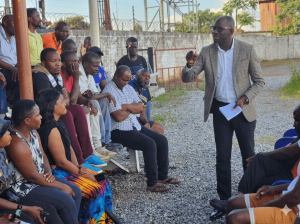
 Among the People · Hon. Binwell Chansa Mpundu playing a traditional bottle-cap board game with a young boy from his constituency, surrounded by local youth in Kitwe’s Copperbelt.
THE TEST
Arrested, Unbowed: The Sedition Case That Became a Referendum on Free Speech
On 15 January 2025, Binwell Chansa Mpundu was arrested and detained at Lusaka Woodlands police formally charged with seditious practices. This is an offence that, under Zambia’s Penal Code, carries a potential sentence of seven years imprisonment with hard labor. The charge arose from a Facebook post dated 20 December 2024, titled “DEFEND YOURSELVES WITH EQUAL MEASURE,”. The police alleged that the post urged politicians to acquire firearms for self-defense.
The arrest immediately sparked a national debate about political speech boundaries. It also raised questions about Zambia’s sedition laws and law enforcement independence. The United Kwacha Alliance issued a formal statement condemning the arrest. It asserted the government was deploying sedition laws as political suppression instruments, not legitimate public order tools. “The Constitution of Zambia enshrines the right to freedom of expression and political engagement,” the statement read. “These rights form the bedrock of our democracy,” it added. Multiple civil society voices echoed the sentiment, noting a perceived double standard. They said authorities applied such laws to opposition figures but not ruling party officials.
Hon. Binwell Chansa Mpundu himself was unequivocal in his response. He maintained that the case was politically motivated, designed specifically to trigger a by-election in Nkana by rendering his seat vacant through criminal conviction. This is a tactic not without precedent in Zambian political history. “I will continue appearing before the courts as a law-abiding citizen,” he stated, refusing to allow the prosecution to define either his public posture or his political agenda. The case was adjourned to September 16, 2025 for possible plea and mention. It remained unresolved as of the writing of this profile.
THE PLATFORM
Policy With Purpose: Education, Energy, and the Long Game
Beneath the theatre of Mpundu’s more dramatic interventions lies a coherent and substantive policy worldview that is shaped by the economic realities of a constituency where working-class families depend on functional public services. On free education, he occupies a nuanced position that defies easy ideological labelling. He supports the retention of the policy but argues passionately that good intentions without adequate infrastructure produce overcrowded classrooms and degraded learning outcomes. “Free education is a good thing,” he has said, “except it must be made better.” He advocates for its extension to the tertiary level, with government sponsorship across all institutions. This is a position that reflects both his personal experience of navigating the education system and his constituency’s aspiration for upward mobility.
On energy, a defining issue for the Copperbelt, his June 2025 point of order addressed CEC-ZESCO pricing. It signalled his awareness that electricity tariff disputes directly and immediately affect constituency businesses and households.
His committee assignments on parastatal bodies and national economy further positioned him as a legislator. He showed specific interest in how Zambia governs state-owned enterprises and what accountability structures surround them.
ASSESSMENT
The Verdict of the Copperbelt
In February 2026, Binwell Chansa Mpundu made an announcement that reframed his entire political narrative. He would not, he told a national television audience, be seeking re-election in Nkana. His work there, he said, was complete. His eyes were now fixed on a larger canvas.
Binwell Chansa Mpundu formally joined the Tonse Alliance; the opposition coalition rallying behind presidential candidate Brian Mundubile for the August 2026 general elections. He framed his departure from Nkana not as a retreat but as a strategic elevation. “I am now part of a bigger plan,” he declared. “We have chosen unity in the face of a common enemy, an enemy to democracy, the economy, and the rule of law.”
Notably, he acknowledged his own presidential ambitions, disclosed publicly in August 2025, but explained that the moment called for coalition over individual pursuit. “Like any other political party, I also want to be president,” he said at the Tonse Alliance announcement event, “but today it is not about individual pursuits. We have not made this decision out of impulse, but after careful consideration in the interest of this country.”
Still, in stepping back from Nkana, a constituency he won against the odds as an independent, held through a legal siege, and represented with a combative fearlessness that earned him national recognition, Mpundu is therefore making a calculated bet that his value to Zambia’s democratic project is now greater as a mobiliser than as a ward-level representative. Ultimately, however, whether that bet pays off will be decided at the ballot box in August 2026.
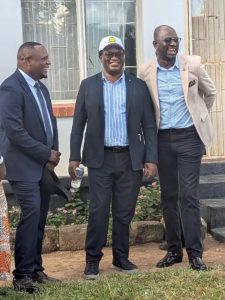
The Coalition Builder · Hon. Binwell Chansa Mpundu alongside fellow opposition figures at a Tonse Alliance gathering.
“We have chosen unity in the face of a common enemy — an enemy to democracy, the economy, and the rule of law.”
— Binwell Mpundu, Tonse Alliance Announcement, February 2026
Binwell Chansa Mpundu is, by any objective measure, a study in political contradictions and the more interesting for it. He trained as an accountant but gravitates toward the messy, non-linear world of democracy. As a former Patriotic Front affiliate, he found his most authentic voice as an independent, and built a strong national following.
Hon. Mpundu is a man who declared presidential ambitions. Then, in the same breath, he chose to subordinate them to coalition strategy. And he is a legislator leaving his constituency seat not in disgrace. As Parliament adjourned, Zambians flooded social media with tributes. He leaves in popular appreciation, the public feeling, for once, someone in that building was genuinely listening.
Whether the next chapter of his political career delivers on the ambition he has articulated so publicly remains an open question. The Zambian electorate has a long memory for promises made and a short one for excuses offered. What is beyond dispute is that Binwell Chansa Mpundu has succeeded in where most politicians on the African continent fail. He has made a substantial portion of his country’s youth believe that the political system is worth fighting for.
That is no small legacy for a man from the Copperbelt with an unshakeable conviction that the numbers must always add up.
Published by Negus Chronicles — the stories of African youths, by African youths.
| neguschroniclesmagazine | neguschronicles.co.zw | @neguschronicles | negus_chronicles
